
By: JP Sylvester
A question often asked in contemporary American cinema is this: how do we talk about the legacy of Jim Crow and systems of mass incarceration without coming across as “preachy”? There is often a tension between portraying the history of racism honestly while also telling a coherent story. After all, it could be argued that the more honestly a film depicts atrocities of the past, the harder it becomes for mainstream audiences to digest it. This tension lies at the heart of RaMell Ross’s historical drama, “Nickel Boys.”
Based on the novel by Colson Whitehead, “Nickel Boys” may technically be fiction, but its narrative is directly based on accounts of young men who were imprisoned at a “reform school” in Florida throughout the 20th century. Ross, in his first non-documentary venture as a director, treats the topics of institutional racism, abuse and violence seriously, but without ever coming across as exploitative.
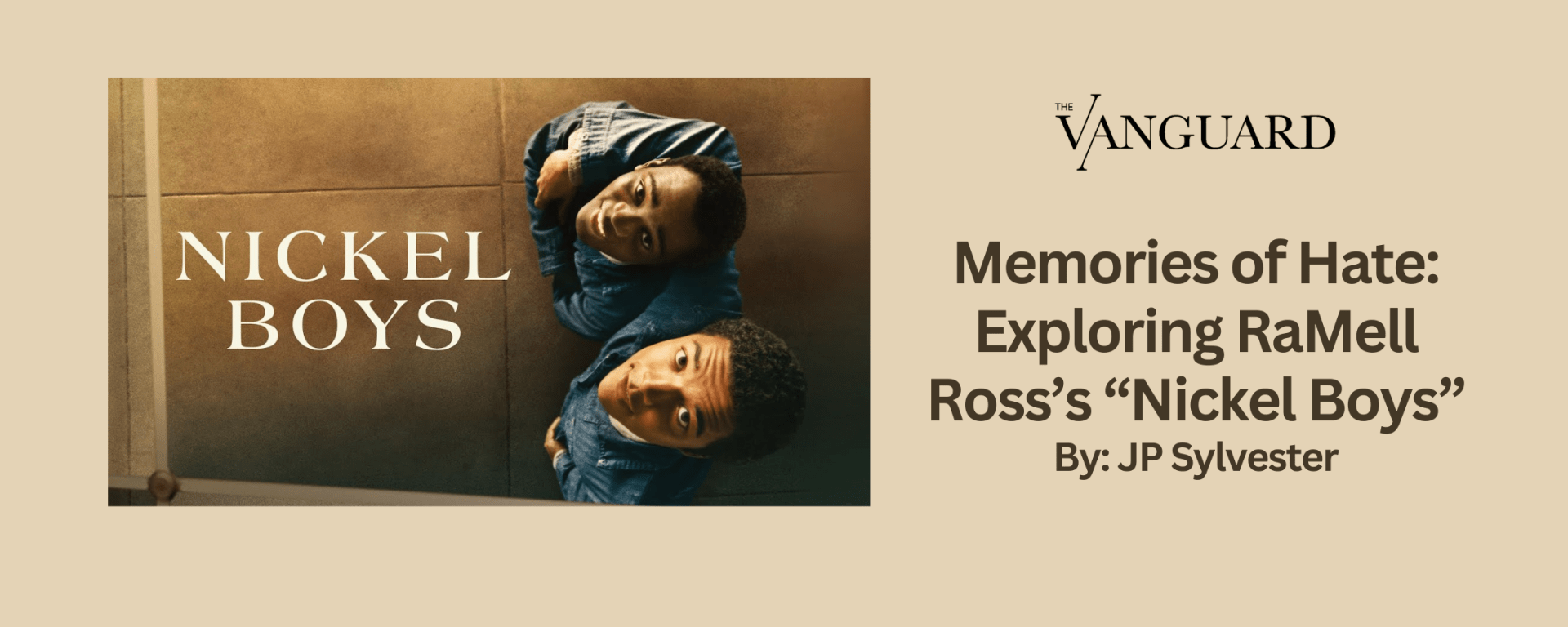
“Nickel Boys” – which was nominated for Best Picture at the 2025 Academy Awards – tells the story of two black teenagers, Elwood and Turner, sent to the abusive Nickel Academy (based on the real-life Dozier School for Boys) in 1960s Florida. At Nickel, the student-inmates are segregated by race, with white students receiving far better treatment than black students, who live in worse conditions and do most of the school’s manual labor. Elwood, well-read and optimistic, was arrested while travelling to college for a crime he didn’t commit, and seeks to model his life after the teachings of Dr. King. Turner, on the other hand, is a “repeat offender,” and views the oppression of Nickel Academy as a microcosm of the systemic racism in society at large. As he tells Elwood during one of their arguments: “The fix’s always been in- game is rigged.”
What makes “Nickel Boys” stand out is its unique camera work. Almost every shot in the film is a long take from the point of view of either Elwood or Turner. This approach allows the viewer to essentially experience the scenes as memories- we see these events as Elwood and Turner remember them. Some may dismiss this approach as a gimmick, but I found it interesting, if a bit overdone. The only real “gimmick” which I would criticize this film for is a confusing and unearned plot twist near its end- apparently taken directly from the source novel. Overall, I appreciate “Nickel Boys” for its experimental approach, although because of this approach, I was not optimistic about its chances for winning Best Picture.
J.P.’s Final Score: 7/10
 Jag Media