
By: Elana Simpson, Contributing Writer
Photo by Lauryn Gunn
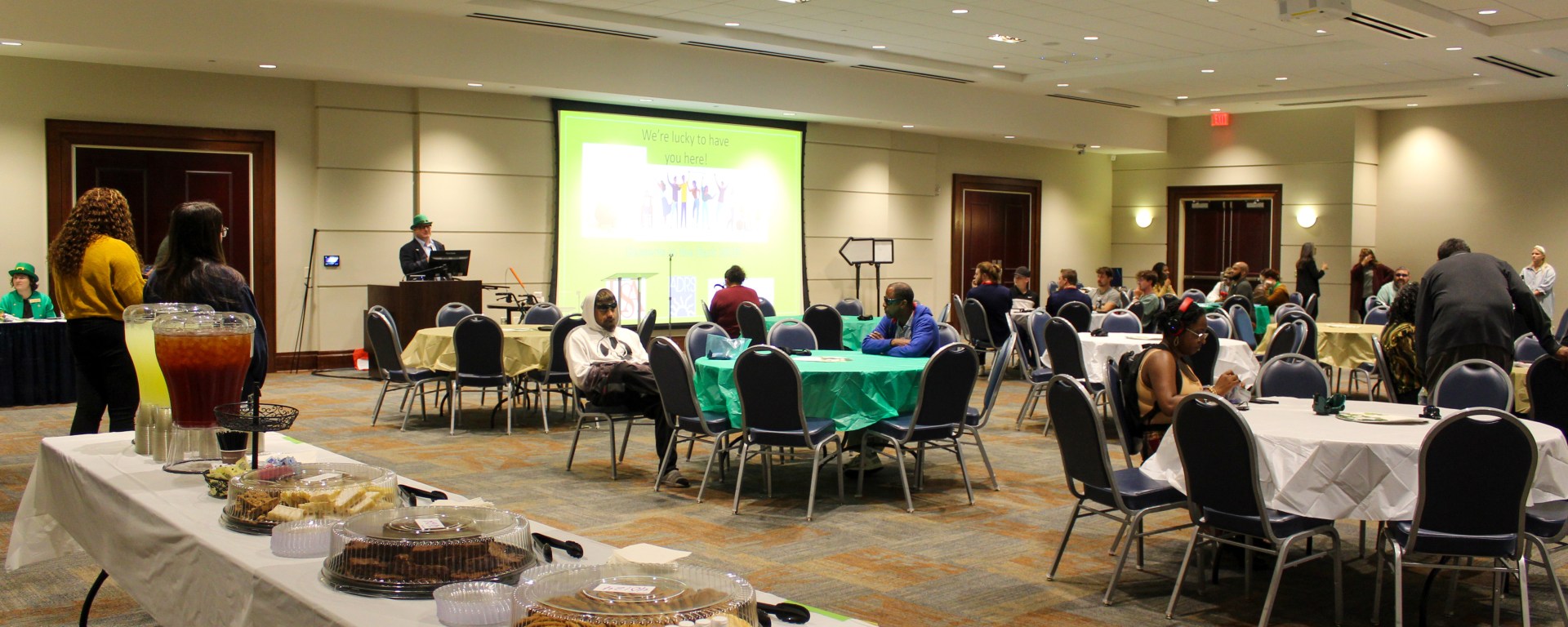
Each year, the Center for Educational Accessibility and Disability Resources puts on an event in the Student Center ballroom and invites students to learn a bit about the community living with vision impairment. I showed up on March 19 prepared to go back in time. Years ago, I felt that I was virtually blind without glasses. This most definitely wasn’t that, and I realized how very fortunate I was that Lasik corrected my vision.
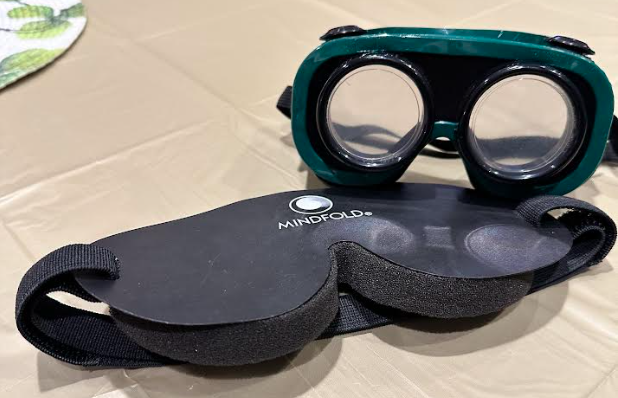
The event was educational and had information tables set up, which allowed participants to try to navigate the world with a visual impairment and use some commonly used devices to live the type of normal that exists for the legally blind. We were offered goggles that changed our vision or blindfolds that removed it entirely. I donned my specially made blindfold, which didn’t even let in light, and tried to use the senses that I rely on a lot less to navigate the world. I signed my name only slightly crooked, counted change with coins by touch (which took forever), tried to understand my name in braille, and even walked a small obstacle course using a white cane and a few verbal cues. I had to lean into trusting the directions of a stranger.
Also at this event, I learned of a few resources that are available for those with a visual impairment. Microsoft has a free ease of access menu that allows you to change the contrast and size of words on the screen. I saw video magnifiers and digital magnifiers that can be used with books, computers and even in the classroom. Unfortunately, these magnifiers are not free and are typically not covered by insurance. At $700 to $3200, they are out of most people’s price range. I saw a catalog full of gadgets that help blind people get information that would be otherwise only available to those with sight. I was particularly intrigued by the talking watches. There was a presentation on how AI is being used to help those with limited sight and how there is continued research into this area where breakthroughs look promising. Representatives from the Alabama Department of Rehab Services were also there to discuss vision rehab therapy and the kind of services that they provide.
Finally, we were asked to keep our vision impairment devices on and eat our desserts. We were served whatever the server wanted to give us, and we had to identify what we ate by taste alone. I saw brownies as I was walking into the event, and I told my server that I don’t like them and asked to have something else. It was strange to trust that what was placed in front of me was not a brownie, and it was even stranger when I realized that I wouldn’t know until I took a bite. We were offered drinks in cups and had to reach for them without knowing entirely where they were on the table. Thankfully, I have been stuffing my face long enough that my hand knows exactly where my mouth is, but we weren’t given utensils and I wondered if I would be as successful finding my mouth with a fork or spoon. I had an oatmeal cookie and a chocolate chip blondie…I think. If I thought ahead, I would have saved some of the desserts on the side to see if my eyes would reaffirm what my taste buds were saying, but alas, I ate it all before I could see what I was eating. Hindsight is always 20/20.
The experience ended once the desserts were eaten, and I was happy to get back my vision. Being blind was a full-body experience unlike anything I was used to. I found myself straining my other senses and begging them for information that only my sight could give. I had to trust people around me in a way that I never had to before. I left feeling grateful for my sight, and I realized how truly different life can be for someone dealing with any type of impairment. I’m glad that there are people and resources supporting this community. Though well attended, there was room for more people to participate. I would encourage everyone to walk these few feet in the shoes of those living with visual impairment. You just might walk away like I did, with a little more empathy, a little more gratitude, and a lot more understanding.
 Jag Media