
By: Elizabeth Eady and Kya Richardson, Contributing Writers
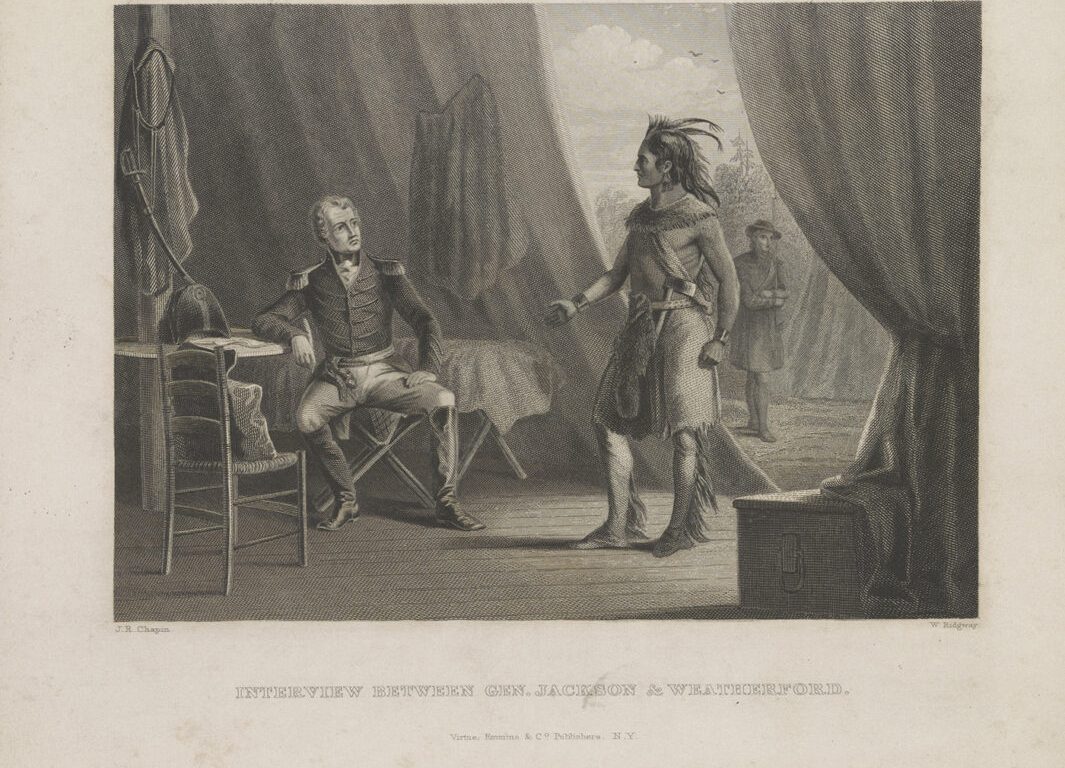
Photo from Library of Congress
It was a desperate time. Brazen acts of fraud only exacerbated land loss within Mvskoke/Creek Nation. It had become increasingly difficult for them to hold on to their ancestral homelands on which the University of South Alabama sits today.
On February 19, 2025, textbook author Dr. Christopher D. Haveman gave a presentation to students in Dr. Deidra Suwanee Dees’ HY 290 Native American Studies class in the Humanities Building, along with the general public who were invited. He provided details from his book, “Rivers of Sand,” which serves as a comprehensive report on the United States’ strategic Removal of the Mvskoke/Creek Indians through nefarious and deceitful tactics.
In Haveman’s presentation, the audience learned that there were many different ways that Native Americans were defrauded of their land. One of the most common types of fraud, Haveman postulated, was that after White land prospectors purchased land from Indians, they would “[take] back most of the purchase money by force after the certifying agent walked away from the sale.”
Before Haveman’s lecture, students in Dr. Dees’ class learned that Mvskokes were forcibly removed from their ancestral homelands, but students did not know the full scope of its operation. From coercion and fraud to forced military authority, Mvskokes fought these tactics to preserve their culture and people.
How did this happen? It is generally understood that legal agreements were instrumental to the United States’ acquisition of Indigenous land. For example, the Treaty of Washington (1832) was specifically successful in this quest as it opened the floodgates for more land prospectors to lay claim to what had become Georgia-Alabama territory.
Students learned that the sheer amount of primary sources and witness accounts included in Haveman’s research are a testament to how well-documented this time period is. It is a shame, however, that many of the full stories referenced in his book are lost to time. Nevertheless, Haveman’s book lays the foundation for future historians and other scholars to fill in the gaps.
 Jag Media