
By: Joseph Deutsch, Caleb Hooper, and An Phan; Contributing Writers
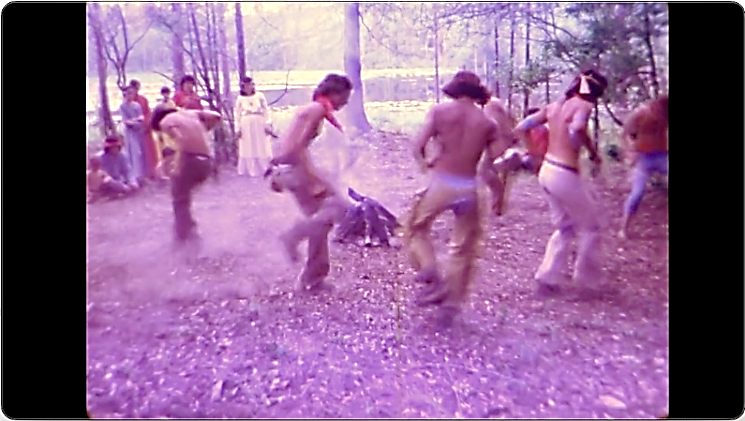
Photo from “Trail of Tears” film
“Get in the line! Come on, faster! Let’s move! Move along, man, move along!” an American soldier yells against the haunting backdrop of thrashing whips. On the evening of March 26, 2025, students gathered in their classroom at the University of South Alabama for a powerful documentary screening of “Trail of Tears,” focusing specifically on Mvskoke/Creek Nation’s forced removal from their homelands.
The film was produced in 1978 by Alabama A&M University in conjunction with Creek Nation East of the Mississippi in Atmore, Alabama. It was intended to air on Alabama Public Television, but over the years, it became lost before it was ever aired. Then, in 2020, the film was miraculously rediscovered by a college student at Alabama A&M University. Because of the student’s rediscovery, the current generation of students is able to witness the newly digitized film.
The film screening, part of Dr. Deidra Suwanee Dees’ HY 290 Special Topic: Native American Studies course, brought to life one of the most important but tragic chapters in American history that depicts the Removal Act of 1830. Utilizing visual testimony, it complements the historical accounts documented in Dr. Christopher D. Haveman’s scholarly work, “Rivers of Sand: Creek Indian Emigration, Relocation, & Ethnic Cleansing in the American South,” the course textbook.
The “Trail of Tears” documentary vividly portrays the brutal conditions faced by Mvskokes/Creeks as they are forcibly marched westward under military authority. In one particularly disturbing scene, American soldiers can be heard shouting abrasive words in this dramatization, powerfully illustrating the coercive nature of the Removal Act.
The journey itself was characterized by extreme hardship and military enforcement. According to Haveman, “American military officers and a surgeon accompanied the detachments as oversight” during the multiple Removal routes, including the Removal of sixteen thousand people that “proved to be extremely difficult” with obstacles “at almost every turn” (p. 201). The documentary’s scenes of Mvskokes/Creeks bound in chains under armed guard, with soldiers barking orders and wielding whips, reflects the historical reality of how removal was executed through military force.
Perhaps most devastating were the physical conditions endured during the journey. In Haveman’s report of Friedrich Gerstacker’s sobering account, he said that many warriors and women “died on the road from exhaustion, and the maladies engendered by their treatment.” Gerstacker, a German adventurer who visited Arkansas at that time, noted that their drivers “would not give them time to dig a grave and bury their dead” (p. 232). The documentary’s portrayal of these conditions helps viewers comprehend the human toll of Federal policies that prioritized territorial expansion over human dignity.
The film screening concluded with a reflection led by Dr. Dees, who shared her photographs from the 2024 Walk of Life commemoration that she attended in Tuscumbia, Alabama: “We commemorate those who walked the “Trail of Tears,” and those who did not make it.” This solemn acknowledgment resonated deeply with the classroom audience, connecting the historical study to ongoing efforts to honor the memory of those who suffered during this dark chapter of American history.
 Jag Media