
Article by: Timothy Connick; Photos by: Lindon Horn
Humanities-affiliated clubs often find meeting spaces in three classrooms in the Humanities Building: Rooms 150, 160, and 170. These auditorium-style rooms allow for clubs with larger numbers or guest speakers, and allow access to equipment that supports screening of movies or documentaries. Additionally, many students prefer these rooms due to their cushioned seats, which can make longer meetings more comfortable. However, the barring of club activities from two of these rooms and restrictions on reservations in the third are resulting in these clubs having to find creative solutions to the reduced space and time slots.
This semester, Rooms 160 and 170 were closed to reservations from clubs due to complaints from professors who use those rooms for lectures and classes. Much of the tension stems from disagreements on the use of the audio-visual equipment in these rooms. “We cannot have classes delayed or disrupted in the morning because the equipment doesn’t work the way that it should work for professors,” explained Dr. Robert Coleman, Assistant Dean of Arts & Sciences and the Humanities Building’s Safety Coordinator. The remaining room, 150, is unavailable for reservations for days in which classes will be held in the space the next morning. “The student center is one of the ideal spaces for use by student groups – that’s why it’s called the student center,” Coleman continued. However, oftentimes the student center’s main meeting rooms are reserved for more official events, such as Student Government Association Meetings, Study Abroad Events, and departmental guest speakers. Not only that, but new specifications during the booking process, due to a large influx of requests, now make it harder to reserve a room for casual student-led organization meetings. These rooms also do not have some of the capabilities – large screens, auditorium seating, and theatre-style chairs – that the humanities building rooms offer. Though it is not always possible, some of these clubs have found alternative solutions.
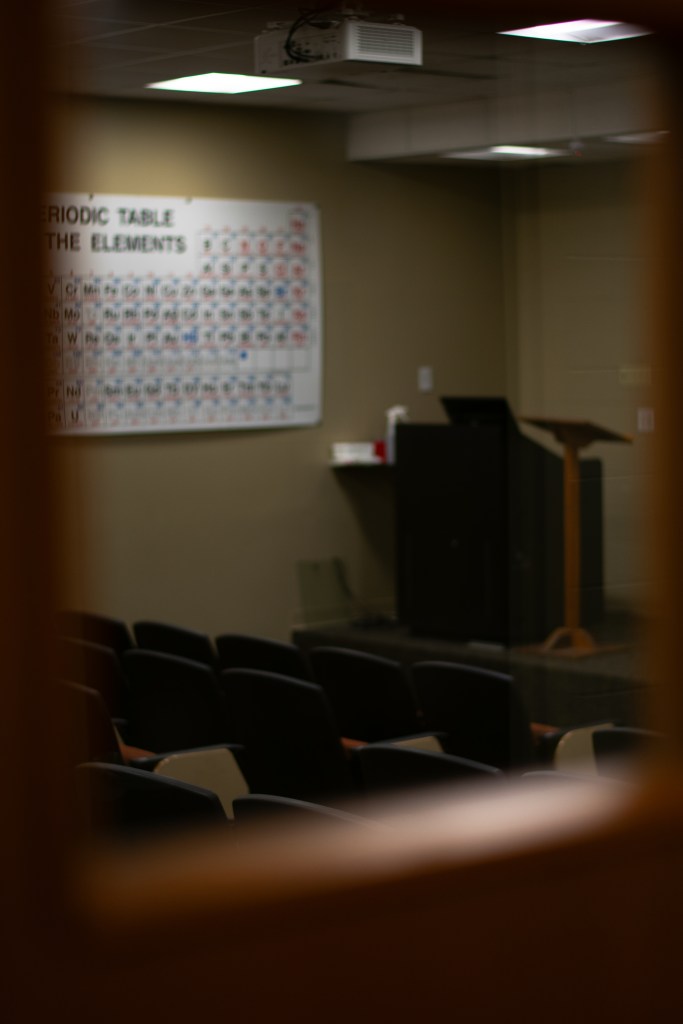
One such example is the Student Youth Labor Movement (SYLM), whose staging of games like Jeopardy and the screening of documentaries require a large, central screen. Upon trying to reserve Room 150, they found the History Society – who required an auditorium for a guest speaker – had already reserved it. Negotiations between the two clubs’ leadership teams led to an agreement for a joint meeting in which both clubs could have their meetings and neither would have to find an alternate location.
“We’re just showing up for each other, and just doing what each organization does,” Elijah Splitt, one of the leaders of SYLM, commented. Despite these agreements between clubs pushing together communities, Splitt believes it is a double-edged sword. “I think it’s amazing when student organizations collaborate,” however, “if the University doesn’t clock down on offering more rooms to student organizations, a lot of student organizations are going to have to do joint meetings – even when they don’t want to.”
Concerns about these meeting rooms and what they could mean for the future activities of their clubs grow as scheduling gets tighter and tighter. Unlike SLYM and the History Society, not all clubs have the option of sharing their meeting times. The South Alabama Film Society (SAFS) is one example of a club that found particular problems with the closure of the meeting rooms. Room 170, their usual meeting spot, was the ideal auditorium space to screen films, a weekly occurrence for the club. “SAFS has been around as an established club since spring of 2023, yet our club was almost homeless – in a sense – due to recent changes,” commented Audrey Borgatti, Vice President of the Film Society. The leadership of another organization, Spectrum USA, agrees. One member of their team commented, “Spectrum has had to move its meetings to inconvenient buildings for our specific needs in the middle of the semester. It has led to hasty decision making and has negatively affected our attendance rates.”
“To get rid of two main rooms is a disservice to student engagement on campus. Clubs shouldn’t have to fight tooth and nail to get a room so that their club can survive,” Borgatti added. As the semester progresses, the tension over this room grows and many leaders of these organizations feel there must be a middle ground between the barring of these rooms and having no regard for professors’ use of classrooms. Both professors and students feel that further discussions should be had to decide on the future of meeting spaces in the Humanities Building.
 Jag Media