
By J.P. Sylvester, Contributing Writer
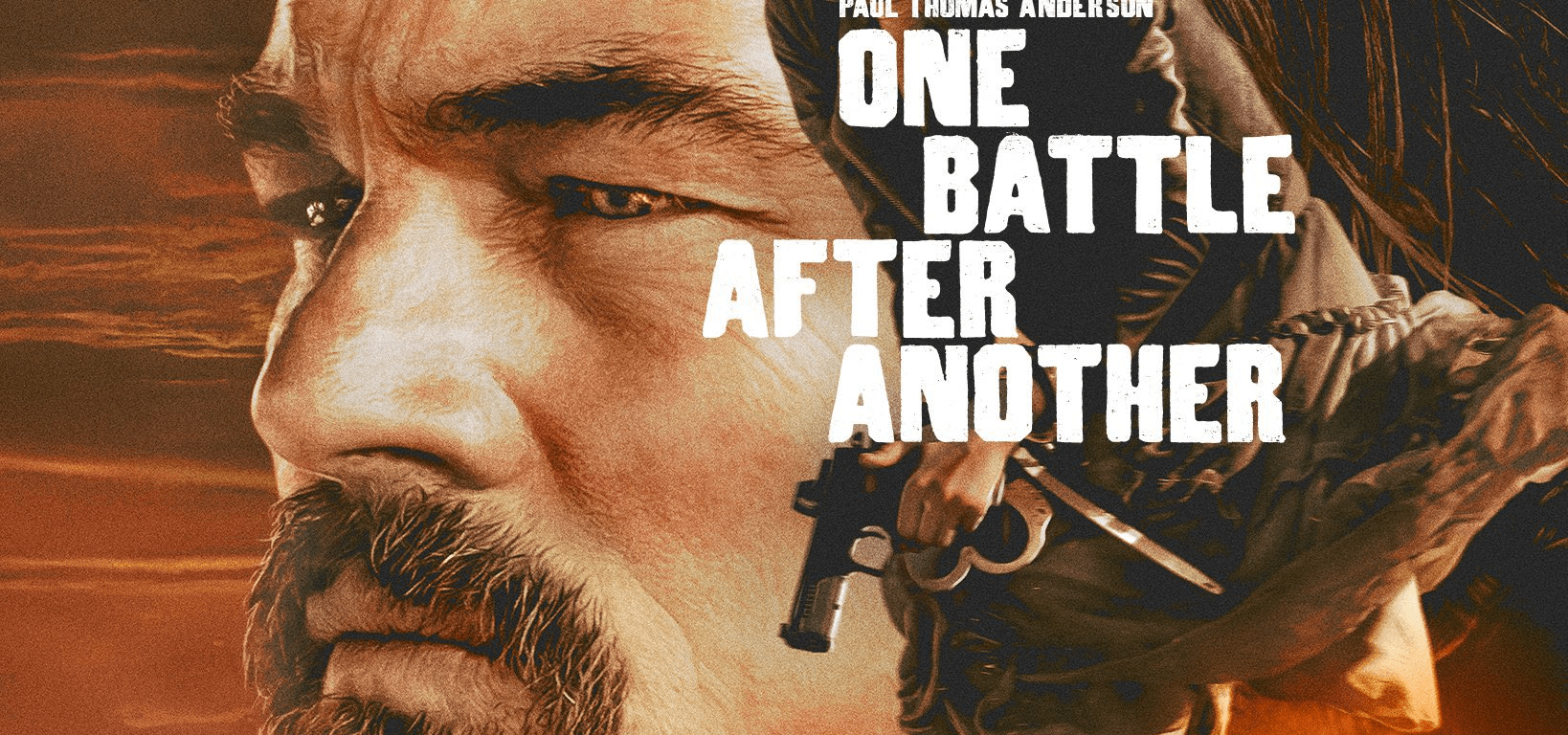
A man in a suit walks up to a door holding flowers. He knocks repeatedly, but there is no answer, so he walks back to his truck, pulls a battering ram out of the back seat, and proceeds to break the door open. This type of imagery pervades “One Battle After Another,” the latest film from writer-director Paul Thomas Anderson (no relation to Wes Anderson), which might be best described as a “Mission: Impossible” film populated with characters from Stanley Kubrick’s “Dr. Strangelove” (1964). The film’s plot is straightforward: a middle-aged ex-revolutionary (Leonardo DiCaprio) is forced out of retirement to rescue his teenage daughter (excellent newcomer Chase Infiniti) from an old nemesis (Sean Penn). It is not an uncommon storyline, but Anderson’s screenplay is set in what I would call a slightly absurdist version of the contemporary United States. In the world of Anderson’s script, left-wing revolutionaries are actively committing acts of terrorism, the U.S. military is conducting violent counteroffensives, and the government is being controlled by a secret men’s club of white supremacists. I will allow the reader to infer which of these three phenomena I find to be most exaggerated.
Like James Gunn’s version of “Superman” earlier this year, “One Battle After Another” is being described online as something uniquely relevant to current political events in America. In the case of Gunn’s film, I think its supposed parallels with real-life events were overhyped. By comparison, “One Battle After Another” is heavily political, though it is not the communist battle cry that many claim it is. While Anderson’s film starts to mention many political and cultural issues, none are really mulled over. It may help those who have not seen the film to think of it as a “thinking person’s action movie,” but an action movie nonetheless.
While “One Battle After Another” has a great script, it does take a bit too long to wind down after the film’s climax. The film ends with an odd needle drop that may be familiar to fans of “The Silence of the Lambs” (1991), probably the only low point in what is otherwise a well-crafted soundtrack, not to mention the excellent score by Johnny Greenwood. The film has an assortment of potent performances, particularly from Sean Penn, whose character is somehow both disturbing and hilarious. Even though predicting next year’s Academy Awards in October is a fool’s errand, it seems unthinkable that “One Battle After Another” will not be nominated in all the major categories. After all, what is more emblematic of our modern era than a story set in a violent, confusing world, where easy solutions are hard to find?
J.P.’s Arbitrary Rating: 9/10
 Jag Media