
Article by: Nakeria Woods, Contributing Writer
*the lowercase of bell hooks name is intentional as this is how she prefers her name to be written and this is deeply connected to her values
Annually, on February 14, Valentine’s Day is celebrated all around the world. Originally, the day was a commemorative day for Saint Valentine, who was martyred. The most popular narrative was that while Saint Valentine spread the teachings of Christianity through Rome in the 3rd century, he was arrested and executed. Later additions to this story, like the idea that Saint Valentine performed Christian weddings and that he wrote his jailer’s daughter a letter signed “Your Valentine,” have adapted the commemoration beyond its original religious context and into the more secular holiday that we see today.
These days, Valentine’s Day is associated with roses, chocolates, and most importantly, a recognition of romantic love for another. As a society, we are all deeply transfixed by romantic love, as seen by the many portrayals of it within our media. Most people have their guilty pleasure love song; whether it is Whitney Houston’s beautiful rendition of “I Will Always Love You” or a newer song like Bruno Mars and Lady Gaga’s “Die With A Smile” (my favorites being Beyoncé’s “Dangerously in Love” and Troop’s version of “All I Do Is Think of You”). Billboards, commercials, movies, and a plethora of other media forms all constantly portray themes of love. With all these depictions of love, can it be assumed that love is something that is intrinsic and natural to all people?
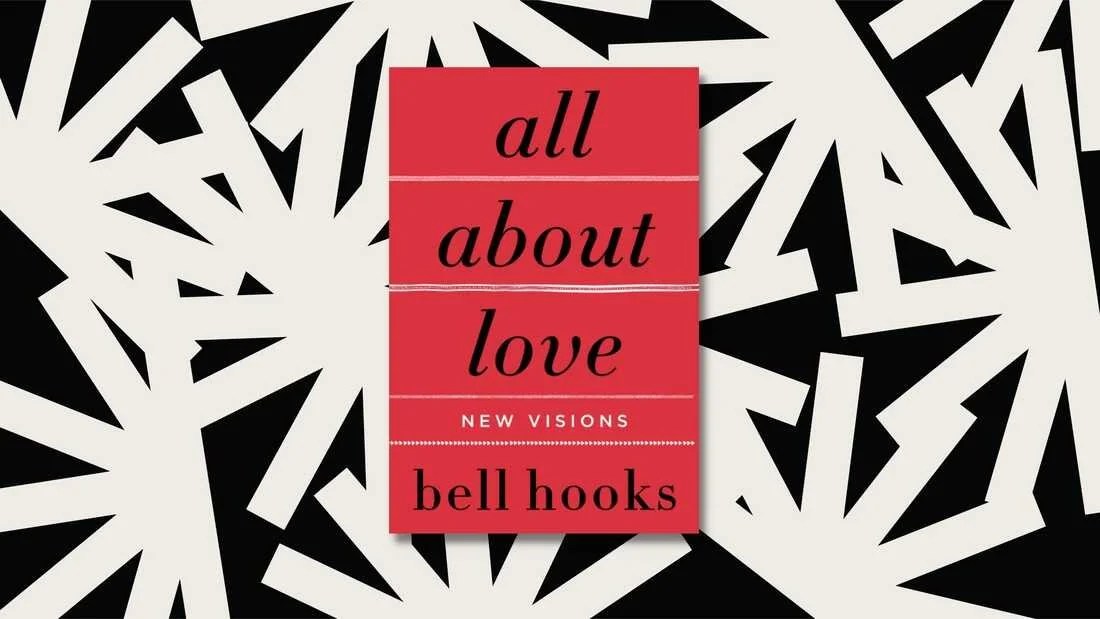
Feminist and scholar bell hooks would answer this question with a definite no. In her classic book All About Love, the first in her “Love Song to the Nation” trilogy, hooks challenges our society’s common perceptions about love. She fully embraces the famous psychiatrist M. Scott Peck’s idea that “Love is as love does. Love is an act of will—namely, both an intention and an action.” In hooks’ view, love is not simply a noun, but also a verb. Affection, which most people are innately drawn to from a young age, is only one “ingredient” of love. To be truly loving, one requires multiple ingredients, hooks identifying them as care, affection, recognition, respect, commitment, trust, honesty, and open communication. To the question that was posed earlier, hooks would argue that by this definition, people cannot intrinsically know how to love either themselves or others, but that people make a choice to truly love.
Although the way that hooks redefines love in her book is deeply fascinating, what is most interesting, and in most need of application, is her idea of the transformative power of love. Throughout All About Love, love is described in a very spiritual sense. To hooks, “love returns us to the promise of everlasting life,” and people can be “touched by love’s grace.” These sorts of descriptions hint at hooks’ belief that love is a powerful force that has the ability to heal communities.
This was not a new idea when bell hooks published her book in 1999, as the idea was deeply connected to the psychology of many social movements. In particular, hooks pulled her ideas from the civil rights struggle in the United States. During the Civil Rights Movement, love was a central theme. This was so much so that Martin Luther King Jr. regularly discussed and promoted the principle of love. In “An Experiment in Love,” King was not concerned with romantic love or affection, but with agape, a love that is unconditional and redemptive. He stated, “Agape is love seeking to preserve and create community. It is insistence on community even when one seeks to break it…a willingness to go to any length to restore community.” King believed that at the center of all struggles for citizenship and dignity, love had to be present. Considering this, it is very ironic that Valentine’s Day always falls in the center of Black History Month.
bell hooks was greatly impacted by King and championed the adoption of a love ethic that “presupposes that everyone has the right to be free, to live fully and well.” Through the full embrace of this love ethic, communities can overcome the sinking pit that is nihilism. The simple want or desire to love others will not help to create a better community, but a recognition of our interdependency and a concerted effort to upend systems of domination and power can. The ideals of our society cause us to emphasize the individual rather than the collective, and as a consequence, “alienation and estrangement” replace a full embrace of a love ethic.
Applying hooks’ “ingredients of love,” we see that caring for one another is not enough. Instead, we must also recognize and respect each other as people with humanity and dignity. We must honestly and openly reconcile the ways we have fallen short and missed the mark, and be committed to a better world for all people to truly create a better community.
This is not a call to abandon Valentine’s Day plans with your significant other, but to see how we all can be better participants in our communities. How do we enact a love ethic throughout our communities? Volunteerism, advocacy, and activism are great ways to positively engage and interact with the communities that we are a part of. In the face of growing nihilism, violence, and fear, enacting a love ethic is an anchor that saves us from what hooks calls the “sea of despair.” For this Valentine’s Day, I recommend reading hook’s All About Love as it often feels as if hooks is directly talking about you; the book is very illuminating and, at the very least, a powerful thought experiment about love.
 Jag Media