
Article by: Nakeria Woods, Contributing Writer
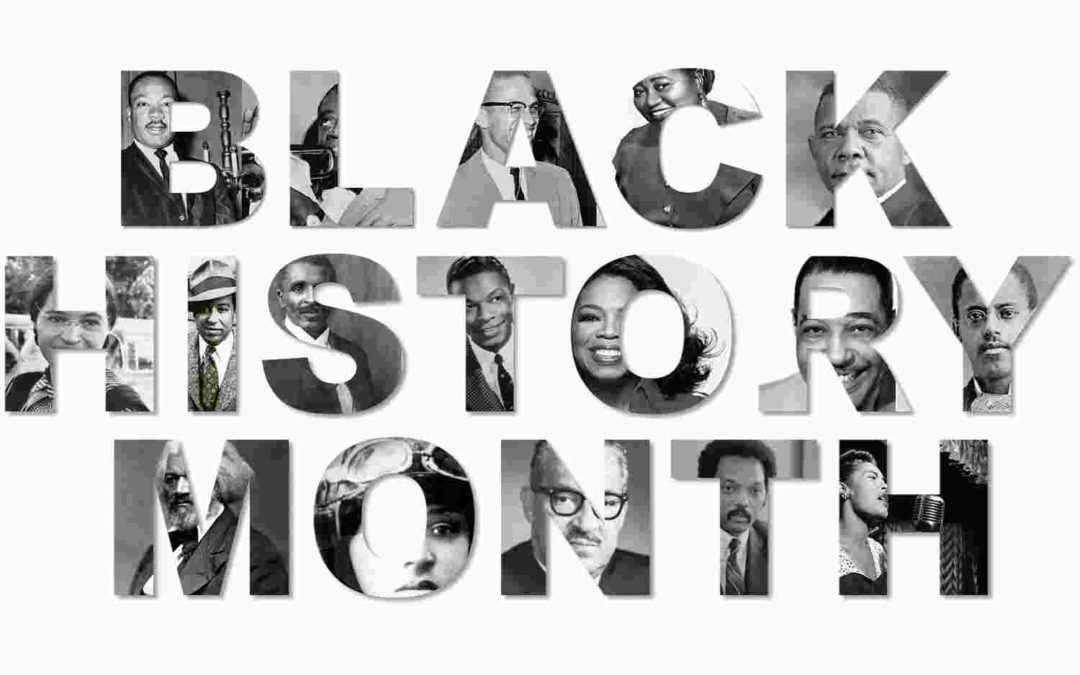
Black History Month is recognized every year in the United States during the month of February. This month is meant to both celebrate the vast accomplishments of African Americans, as well as recognize the immense progress that has been made in terms of race relations.
Originally established as Negro History Week by Carter G. Woodson in 1926, this year marks the 100th celebration of Black History in the United States. The Association for the Study of African American Life and History (ASALH), also established by Woodson and other Black scholars in 1915, officially declared the Black History Month theme of 2026 to be “A Century of Black History Commemorations.”
Woodson, known as the “Father of Black History,” was not only dedicated to popularizing the achievements of African Americans but also to instituting Black History as a recognizable and worthy field of study. Along with the ASALH, he helped found The Journal of Negro History in 1916 (now known as The Journal of African American History). In The Story of the Negro Retold, Woodson expressed his belief that “[i]f a race has no history, if it has no worthwhile tradition, it becomes a negligible factor in the thought of the world. It stands in danger of being exterminated.”
The formation of Negro History Week was a product of this belief. The week was established in February to encompass the already popular commemorations of Frederick Douglass and Abraham Lincoln’s birthdays by Black Americans. Over the decades, the popularity of the week grew, many cities recognized it, and the week was expanded to Black History Month, which is known today.
On the bicentennial of the nation’s founding and fifty years after Negro History Week was created, President Gerald Ford formally recognized Black History Month in 1976. He stated, “In celebrating Black History Month, we can take satisfaction from this recent progress in the realization of the ideals envisioned by our Founding Fathers. But, even more than this, we can seize the opportunity to honor the too-often neglected accomplishments of black Americans in every area of endeavor throughout our history.” A decade later, Congress enacted Public Law 99-244, officially making February Black History Month.
Even before Woodson created Negro History Week, Black Americans concerned themselves with recognizing the historical accomplishments of other Black Americans. George Washington Williams, an influential African American soldier who served in the Ohio state legislature and practiced law, published one of the first comprehensive histories of African Americans. In 1882, he published The History of the Negro Race in America 1619-1880, which highlighted the contributions and patriotism of Black Americans. Washington was particularly concerned with the military contributions of Black Americans to the American Civil War, making the case for Black Americans to be fully seen as citizens for their loyalty to the Union.
Early histories, such as the ones produced by Williams, greatly inspired Woodson and other Black scholars in the early 20th century. What is most peculiar about the history told by Williams and the scholars who came after him was their purpose in writing. Scholars like Woodson wanted the acknowledgement of Black presence within the larger story of America. Vincent Harding, a later African American historian and activist, critically analyzes this early historical work as “a battle in which we sought to be accepted on the terms by which this nation defined itself.” In this process, Harding believed that these scholars were misguided in believing that Black Americans could be included in the already established narratives about America without severely rupturing the country’s very foundations. To accurately account for the presence of Black Americans, American history had to be totally reexamined and rewritten.
W.E.B. Du Bois’ 1935 book Black Reconstruction: An Essay Toward a History of the Part Which Black Folk Played in the Attempt to Reconstruct Democracy in America, 1860–1880 is an example of this. Within this book, Du Bois completely retells the story of the Civil War and Reconstruction as he centers on enslaved Black Americans. Du Bois showed that the standard narrative of these events does not hold when Black people are considered. In the last chapter, “The Propaganda of History,” he reflects, “One is astonished in the study of history at the recurrence of the idea that evil must be forgotten, distorted, skimmed over…The difficulty, of course, with this philosophy is that history loses its value as an incentive and example; it paints perfect men and noble nations, but it does not tell the truth.”
World War II and the growth in popularity of anti-colonial rhetoric greatly influenced Black scholars. Frantz Fanon and his theories of how colonialism and exploitation not only impacted a victim’s material situation but also their psychology were greatly influential. As African Americans increasingly identified with decolonial movements abroad, Fanon’s idea of the “colonization of the mind” deeply impacted how American social activists and scholars approached their work. Within this new framework, Black historians had the great task of deromanticizing and recontextualizing American history. New questions had to be asked about America, such as “Was America truly the nation that it had long been presented as?” and “What does America mean to its most marginalized inhabitants?”
The Black Campus Movements of the 1960s grew out of these reconsiderations, and its demands produced numerous African American Studies Departments, one of them being right here at the University of South Alabama. Early Black historians like Williams, Woodson, and Du Bois fought for the study of Black Americans to simply be considered in academia, and today African American Studies Departments represent the fruits of their labor.
Reckoning with Black History means coming to terms with how it complicates popular narratives about the nation. The story of progress and the story of exploitation and degradation are not separate, but instead deeply intertwined. One of the best explorations of this is Frederick Douglass’s 1852 4th of July speech, where he questions, “What, to the American slave, is your 4th of July?” As the nation celebrated 76 years of its founding, millions simultaneously remained in the cruel system of chattel slavery. These deep contradictions are revealed through Black History and are central to America. This frightens many people as it upsets the more digestible story. It is hard to reconcile what Black History shows with what we have been taught our entire lives, but this does not mean that we should give up or be confined by this history. Du Bois states that “Nations reel and stagger on their way; they make hideous mistakes; they commit frightful wrongs; they do great and beautiful things. And shall we not best guide humanity by telling the truth about all this, so far as the truth is ascertainable?” Let’s use the complexities of our national history to envision and create a better world for all people. To celebrate Black History Month in Mobile, visit https://www.mobile.org/blog/post/celebrate-black-history-month-in-mobile/ to see the many available events.
 Jag Media