
Article by: Nakeria Woods, Contributing Writer
As of late, Black Greek Letter Organizations (BGLOs), popularly referred to as the Divine Nine, have exploded in popularity on the internet. The popular features of BGLOs, such as strolls and chants, are being introduced to an entirely new audience. Despite this, these organizations did not just now materialize. They have a long, complex history that is intertwined with the way Black Americans have sought to form communities in the United States.
In the late 19th and early 20th centuries, Black Americans had limited educational opportunities, especially in higher education. Though the United States made a concerted effort to create more universities and colleges, few of these educational facilities accepted Black students. Even as Black colleges were founded in response to this discrimination, many Black students still tried their luck at predominantly white institutions (PWIs). The few Black students who were able to attend these universities were still excluded from participating in social clubs and activities on campus.
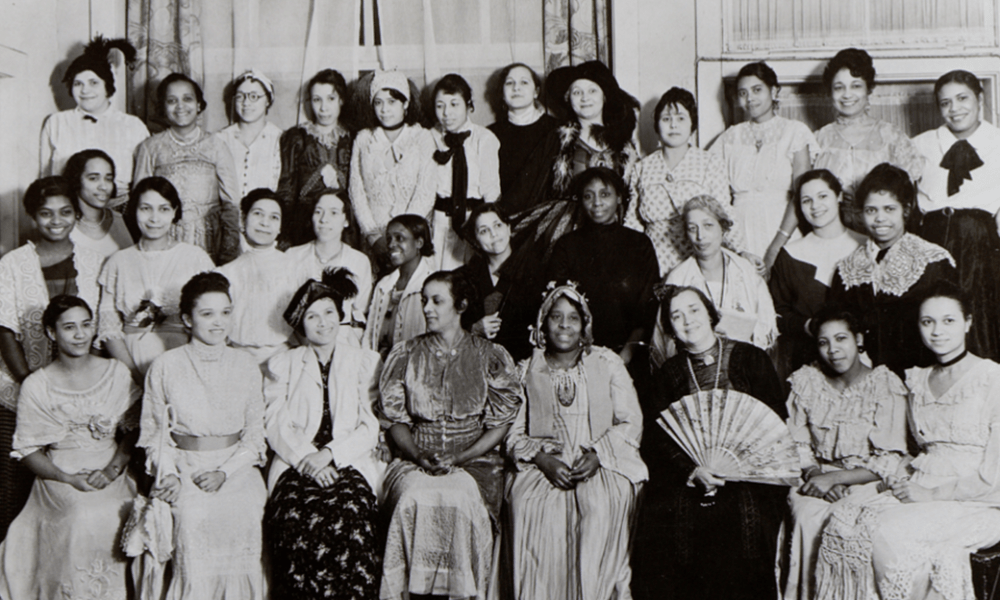
It was out of this situation that Alpha Phi Alpha (ΑΦΑ), the first BGLO, was founded in 1906 at Cornell University. Two years later, Alpha Kappa Alpha (AKA), the first Black Greek Letter sorority, would be founded at Howard University, a historically Black university. Over the next decades, many other BGLOs were established, and in 1930, the National Pan-Hellenic Council (NPHC) was formed at Howard University as an umbrella organization for these Black sororities and fraternities. NPHC was important in that it tied these organizations together, particularly as white GLOs did not want to affiliate with BGLOs. Iota Phi Theta (ΙΦΘ) was the last BGLO to join NPHC in 1996, completing the Divine 9.
In an interview with Jordan Carter, the assistant director of fraternity and sorority life at the University of South Alabama, he expounded on the importance of NPHC and BGLOs. As a member of Alpha Phi Alpha Fraternity, Incorporated, Carter sees the formation of ΑΦΑ as a reaction to the little representation that there was for Black students at PWIs and as a way for Black students to convene under the values of “service, education, advocacy, and scholarship.” For Carter, though Black students were “at a disadvantage,” they still aimed to form communities at educational institutions as they recognized they could not “get through life” by themselves.
Ultimately, the biggest question is: “Why were and are BGLOs still so needed even now that many explicit barriers for Black students have been dismantled?” To this question, Carter gives multiple answers, one of the most significant being that BGLOs serve as “preparation for the real world.” Within these organizations, students develop useful skills for the professional world like networking and conflict resolution. Carter finds BGLOs essential in the way that they teach students to be a part of something bigger than themselves, while also still maintaining their own personal identities.
One aspect of BGLOs that is very unique is the lifetime commitment that members have to their chosen organization. It is not uncommon for Black Americans to still proudly claim their organization long after they have graduated from college. Many Black leaders were members of BGLOs: Martin Luther King Jr., W.E.B. Du Bois, Mary McLeod Bethune, Zora Neale Hurston, and many more, being notable examples. Carter believes that embracing the principles and the complex history of the nine BGLOs is an important aspect of continuing a significant legacy. This legacy, though born out of explicit exclusion, is representative of the immense perseverance of Black Americans.
South is significant in this story as the first PWI in Alabama to have all nine BGLOs chartered. The first BGLO to be chartered at South was Alpha Kappa Alpha in 1970, and last year, Iota Phi Theta was chartered, officially completing the Divine 9. Carter explains that it was his goal to have the Divine 9 completed when he took his position at South. As a PWI, having all nine organizations chartered is very significant for both the experiences of Black students and also for normalizing relations between all GLOs. To get engaged with BGLOs at South, follow @thetadelta_alphas, @epsilonupsilon1970, @etanunupes, @ZetaKappaques, @usa_iotas, @SouthSigmas, @DeltaLambda_zetas, and @PiOmegaPoodles on Instagram.
 Jag Media