
By: Emory Waye, Contributing Writer
Photos by Alex Allen
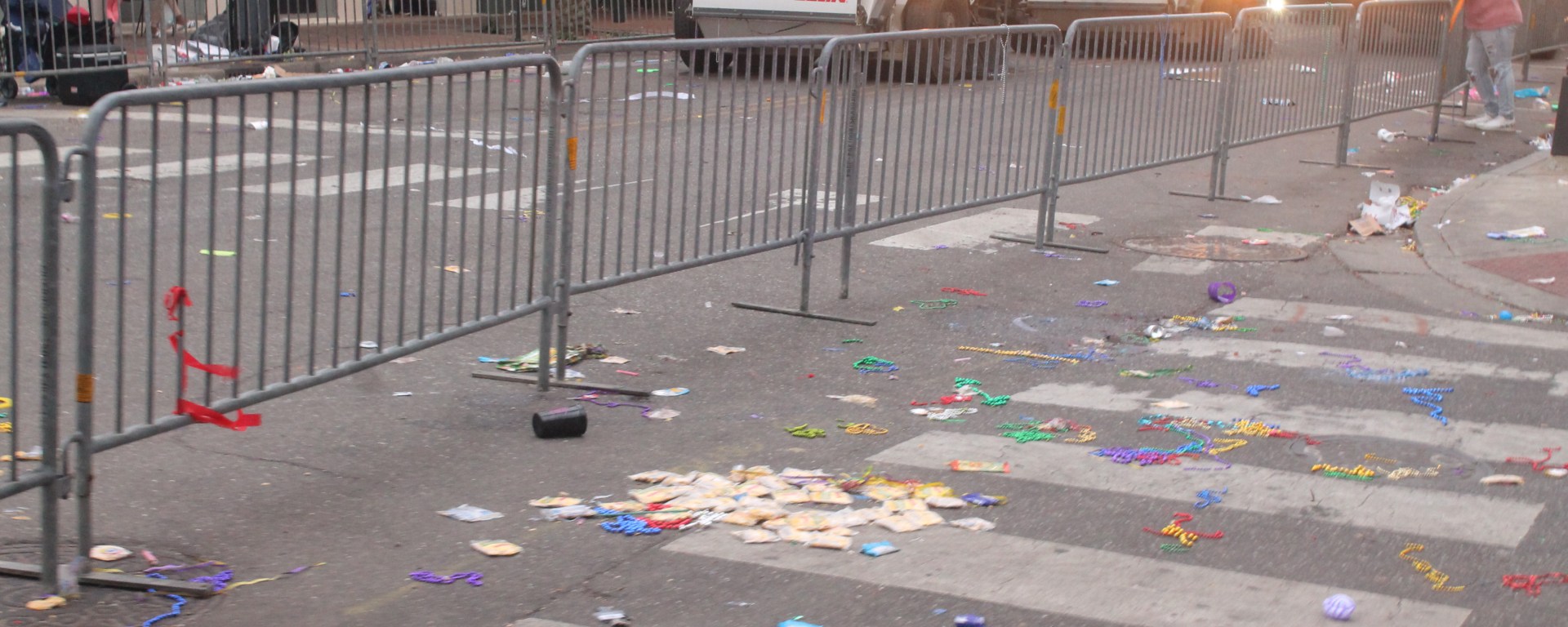
Each year during the Mardi Gras season, hundreds of people crowd the sidewalks of downtown Mobile in an attempt to catch the various shiny, cheap items being thrown from the floats. We step on each other’s toes, bump people out of the way, and jump up and down to attract the throwers’ attention. Items that don’t meet grabbing hands whiz past and end up on the ground. They are immediately forgotten and trampled over when the next float comes along.
It is all in good fun, but as I was standing there on the sidewalk in the middle of a screaming crowd, I couldn’t help but think that something about it felt a bit dystopian. The items that are so coveted when flying through the air end up useless, junky, clutter that will make its way into the drains, clogging our waterways and having to be pulled back out. Most, if not all, of the goodies will provide nothing but the momentary pleasure that comes with the triumph of intercepting them. For the most part, Mardi Gras floats do not throw items that contain everyday use, or even long-lasting pleasure. The demand for an abundance of Mardi Gras items has reduced the quality of throws, which has in turn reduced the desire for cheap items like beads and thin frisbees. Krewes of 3,000 riders are able to spend a few dollars less on imported throws, only to then end up having to spend $30,000 towards recycling initiatives. The reality is that after catching all of your beaded necklaces, they may sit in your house for a couple of weeks or months before you inevitably have to decide whether to put them away in a box somewhere, “for next year,” or throw them away and contribute to even more landfill pileup.
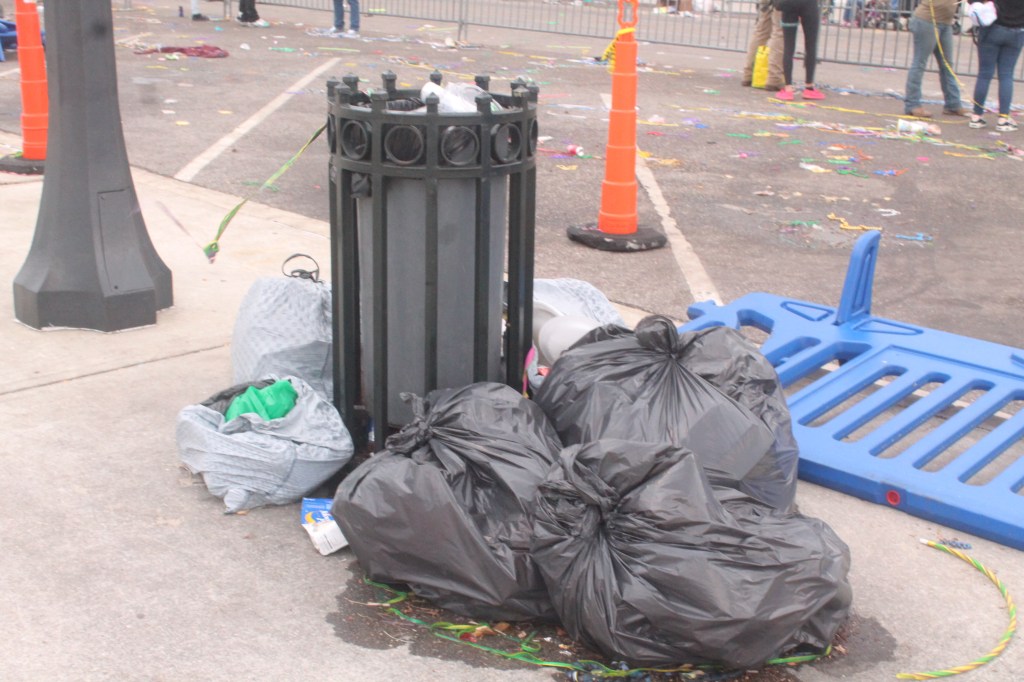
Mardi Gras is a centuries-old tradition that is enjoyed by people of all ages, backgrounds, and religions. It is a time of celebration in cities like Mobile and New Orleans, but also all over the world. The holiday should be celebrated without the fear and guilt of causing damage to our environment and to ourselves.
If you’ve stayed until the end of a Mardi Gras parade, you know that the litter left on the streets is sprayed off of the road to then be discarded by street sweepers, and eventually, city workers pick it up by hand. Some organizations volunteer to pick up trash after parades, but not many do. Unbeknownst to most, an estimated 100 tons of trash are collected during the celebrations. Many non-biodegradable, plastic beads end up tangled in trees or clogging waterways. The toxic chemicals found in the plastic beads can lead to water pollution and can also obstruct water flow, leading to flooding. The beads can also make their way into bodies of water, where they may either be consumed by or get tangled around aquatic life. In 2018, 2.6 million pounds of waste was generated from New Orleans’ Mardi Gras festivities.
In recent years, there have been efforts to make Mardi Gras more eco-friendly. A native New Orleanian, Brett Davis, founded Grounds Krewe, a non-profit organization aiming to reduce the environmental impact of Mardi Gras. Grounds Krewe has developed some biodegradable throws such as bead necklaces, coffee beans, popcorn, soap, honey, bug spray, cups, and confetti. The quality of these items is much higher compared to the items normally shipped in bulk from foreign countries. This would hopefully make people more inclined to keep their beads and hang on to multi-use items.

Screenshot of Grounds Krewe website
The paper beads that the organization creates are crafted from recycled magazine paper by women in Uganda. The women are paid a wage that is higher than what they would typically earn, allowing them to support their families. The necklaces are unique and fashionable items that can be worn and used long after Mardi Gras festivities.
There are also efforts in Mobile to recycle and reuse Mardi Gras beads. Augusta Evans Special School of Mobile hosted an opportunity for people to donate old beads. For every 12 pounds of beads, people would receive a voucher for one dozen Krispy Kreme donuts. The school also allows students to resell beads that they have tagged and repackaged from the previous Mardi Gras.
While all individuals can do their due diligence to create a cleaner, greener Mardi Gras, the commitment to using biodegradable throws will have to come from the Krewes themselves. As more green resources for Mardi Gras are invented in the coming years and awareness is spread about the environmental harm caused, we can hope that sustainable throws will become the norm. We can also support organizations like Grounds Krewe and local schools in their efforts. It is important to educate ourselves and our friends on how we can contribute to more recycling efforts in order to keep toxic chemicals out of our waterways and protect our planet’s inhabitants.


Great article; well-written and informative. Thank you.
LikeLike