
Article by: Nakeria Woods, Contributing Writer, Photos by Chandler Pittman
On the first Friday of every month, the University of South Alabama’s McCall Library does a drop-in tour. The McCall Library, the full name being the Doy Leale McCall Rare Book and Manuscript Library, is located on the third floor of the Marx Library and is generally accessible by appointment. The library began doing tours last year as a way to introduce students to the library and what it has to offer. Director Deborah Gurt understands how intimidating coming to the McCall Library can be, so these tours help to overcome this in a continuous, casual manner.
The purpose of this library is to house, collect, and preserve a wide variety of sources regarding the history of southern Alabama. These sources include oral histories, dissertations, textbooks, legal documents, personal papers, and much more. Originally, the McCall library only housed photographs, but the addition of Doy Leale McCall Sr.’s collections in 2011 transformed the archive into a manuscript and rare book library. McCall was an avid collector of sources surrounding influential, often land and slave-owning, families in the Blackbelt. The McCall family decided to donate this $3.1 million collection to the library, and the archive’s name subsequently changed to the name it bears today.
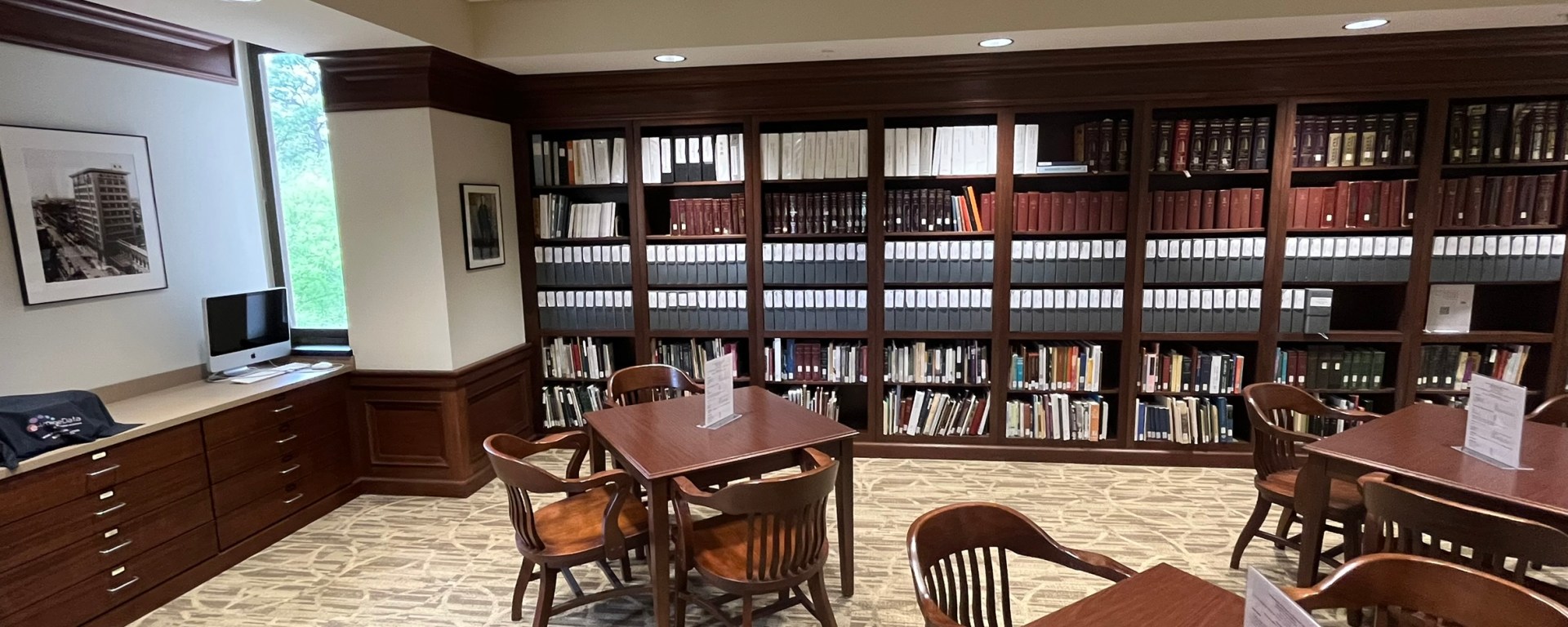
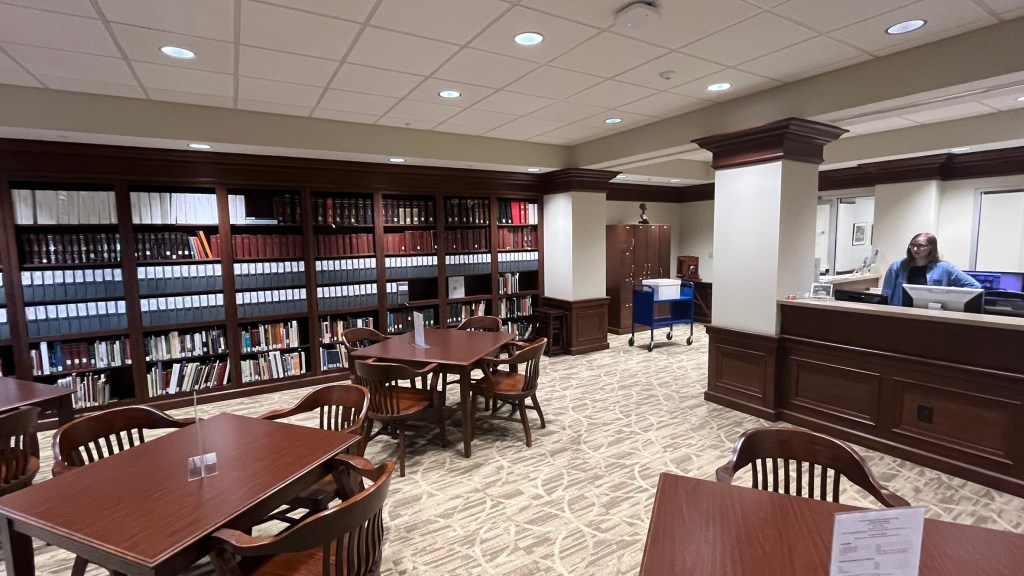
The drop-in tour begins in the reading room, the only public area of the McCall Library. Being led by either Director Deborah Gurt or one of the archivists, Santana Harmon and Daniel Shemwell, attendees will be introduced to the small portion of sources that are placed within this public area. The most prevalent of these sources will be the city directories that date from the 1850s to the 1970s. Directories can be seen as extremely informative phonebooks that can detail the occupation, businesses, and essential information about a person. Other sources, like rare books and photographs, are also present in the reading room.
After a brief time in the reading room, the tour moves on to the non-public areas of the McCall Library. Attendees will first encounter the processing rooms. Processing rooms are where the organizational aspects of archives take place. In these rooms, archivists store different materials, process different media, create finding aids, digitize sources, organize collections, and complete other important organizational tasks.
The most fascinating aspect of the tour, though, will be the many vaults that the McCall Library has. The first set of vaults attendees will experience is the Negative Vaults. Negatives are images that invert light and dark areas and can be used to make positive prints. The largest negative vault contains 35 to 120 milliliter negatives that are typically made of polyester-type material or glass. In this vault one can find old issues of the Azalea City News, the Mobile Press/Register, and many other sources.
Connected to this large vault are two other vaults that are even more tightly enclosed for preservation and safety reasons. The Nitrate Vault contains nitrate negatives, which are extremely flammable. These types of negatives were very prevalent up until the mid-20th century. Because of their flammability, they fell out of use and now require special preservation techniques. The negatives are contained in aluminum boxes inside an isolated, controlled room with a fire suppression system. The last negative vault is the Safety Vault, which houses the cellulose acetate negatives. Acetate cellulose negatives especially gained prominence after nitrate negatives declined in usage. These negatives have to be isolated because as the acetate cellulose breaks down, acetic acid is released in a process called vinegar syndrome. Vinegar syndrome deteriorates the material and spreads, as well as gives off a vinegar-like smell.
The next vault shown during the tour will be the Manuscript and Book Vault. This vault is expansive, containing legal records, personal and organizational papers, textbooks, and audio-visual materials. Mobile organizations like the League of Women Voters and Junior League of Mobile, as well as prominent people like Commissioner Lambert Mims and Jack Edwards, all have collections. The final vault is the Special Collections Vault, which holds the most valuable of sources found at the McCall Library. Among these sources are the McCall papers, as well as collections for John L. Leflore and Africatown.
Though these sources are not as fragile as the nitrate and cellulose negatives, they are still stored in a specific way. The temperature is kept between 65 and 70 degrees Fahrenheit with 30-50% humidity. Light exposure is minimized by covered windows and timed lights, and papers are contained in acid-free boxes. Gurt emphasizes that, most of all, consistency is important for the preservation of sources.
Lastly, for every tour, the McCall Library staff displays a negative collection. During the latest tour, the Overbey Collection was showcased. Eric Overbey was a photographer who owned a business in Mobile. His glass-plate negative collection dates back to the early 1900s and includes his own works, as well as works from an older photographer. The pictures displayed featured a portrait and a Mardi Gras event. Each tour displays a different collection, making each one unique.
The McCall Library’s drop-in tours are an easy way to learn about the library and about archives and archival work generally. This library is rich with valuable resources that are underutilized. For a more in-depth look at the collections of the McCall Library, you can visit https://www.southalabama.edu/libraries/mccallarchives/. If you want to view the collections in person, you can schedule an appointment by calling (251) 341-3900 or by email at mccalllib@southalabama.edu.

