
Article by: Breyona Padgett, Contributing Writer
An immigration-focused campus event hosted by Young Americans for Freedom sparked discussion, online backlash, and increased security measures at the University of South Alabama.
The event, organized in response to recent campus conversations and protests surrounding immigration and ICE, aimed to provide students with an opportunity to engage in discussion and ask questions on a highly debated national issue.
Joshua Smith, chairman of Young Americans for Freedom at South Alabama, said the organization wanted to encourage open dialogue between students with differing viewpoints.
“The reason for the event was to have discourse about immigration,” Smith said. “There had been protests on campus, and we felt it was a good opportunity to have a Q&A with someone who could offer more perspective on the issue.”
The event faced an unexpected challenge when its original speaker canceled the morning it was scheduled to take place. According to Smith, organizers were forced to quickly find a replacement speaker within a matter of hours.
Despite the setback, the organization secured a new speaker and moved forward with the event.
However, campus response extended beyond attendance.
Smith said the event flyer circulated widely online, receiving more than 14,000 views and thousands of comments. Along with increased visibility came criticism and threats directed toward organizers. “We received a lot of negative comments,” Smith said. “There were even some threats made in response to the event.”
As a result, university officials relocated the event and implemented additional safety measures, including security sweeps of the venue and surrounding parking areas before the program began.
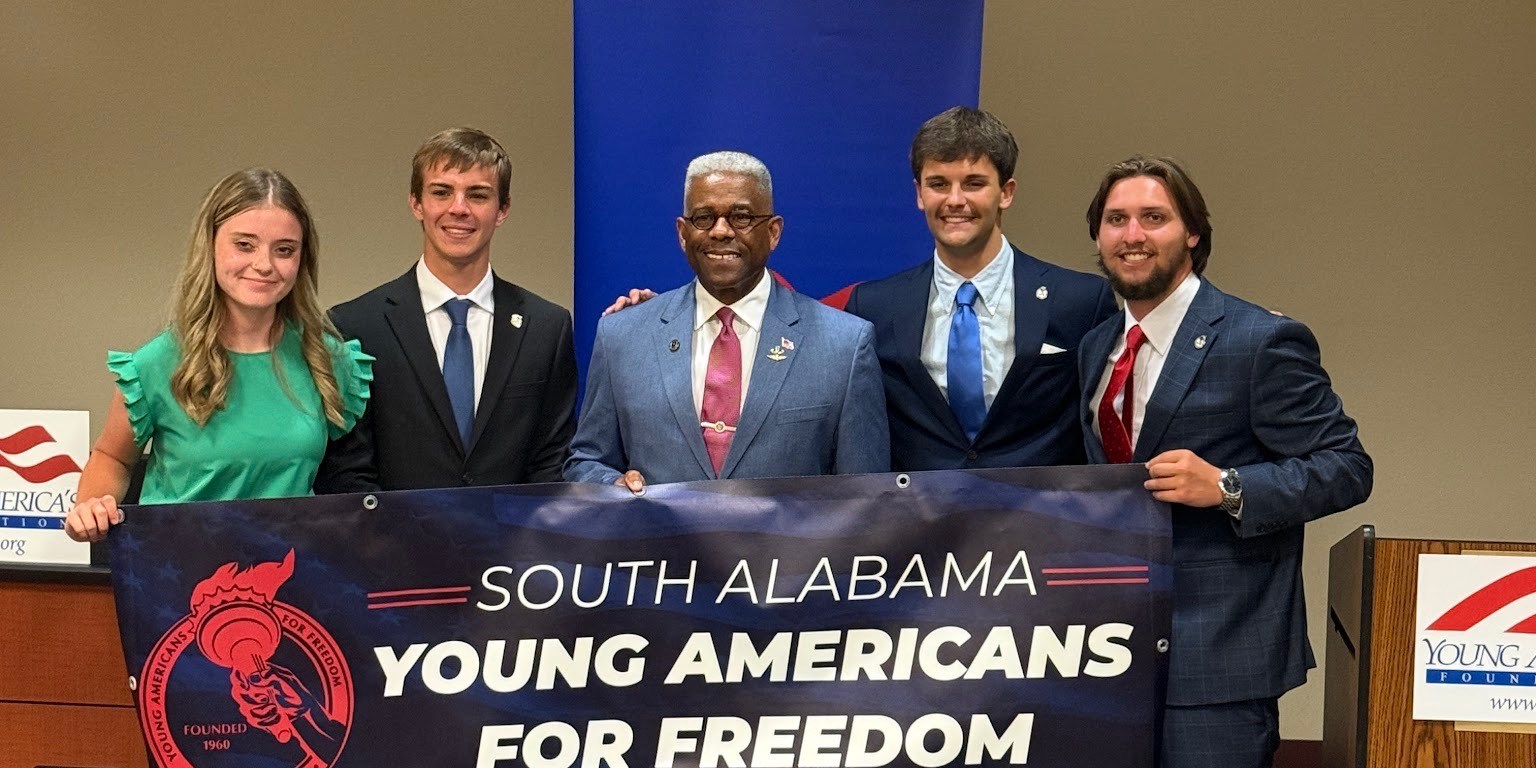
Founded in 1960, Young Americans for Freedom is a national conservative student organization focused on constitutional rights, limited government, and free speech. The South Alabama chapter regularly hosts programming centered on political, cultural, and constitutional topics.
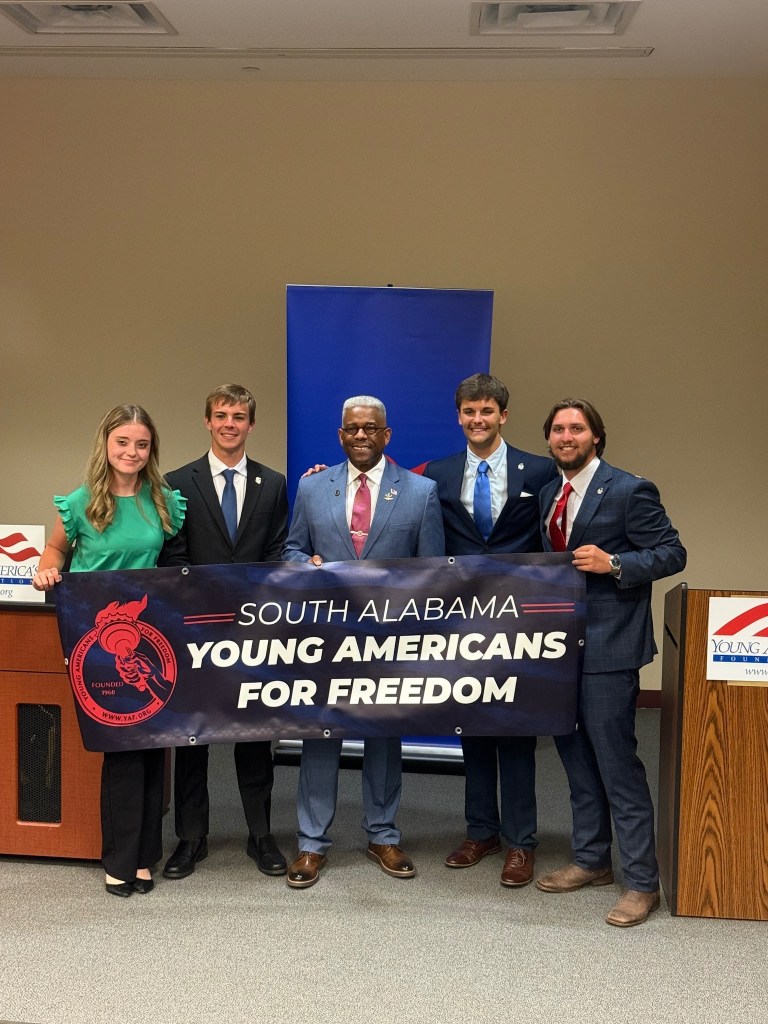
(Nora Nixon, William Davidson, Lt. Col. Allen West, Caleb Corley, and Joshua Smith)
Smith said the organization’s goal is not to exclude students with opposing beliefs, but rather to create opportunities for discussion. “We welcome people from different backgrounds and perspectives,” Smith said. “Discussion and conversation are important.”
The event also reignited broader conversations about political expression on college campuses and how universities balance open dialogue with campus safety. While some students viewed the event as a necessary opportunity for discussion on a controversial topic, others questioned whether similar programming contributes to meaningful conversation or further polarization.
Smith said Young Americans for Freedom plans to continue hosting speakers and events based on topics currently relevant to students. “We try to focus on issues students are already talking about,” Smith said.
As national political debates continue to influence campus life, events like this reflect the growing intersection between student activism, public policy, and free expression in higher education.

