
Article by: Emily Bowers, Contributing Writer, Photos by Chandler Pittman
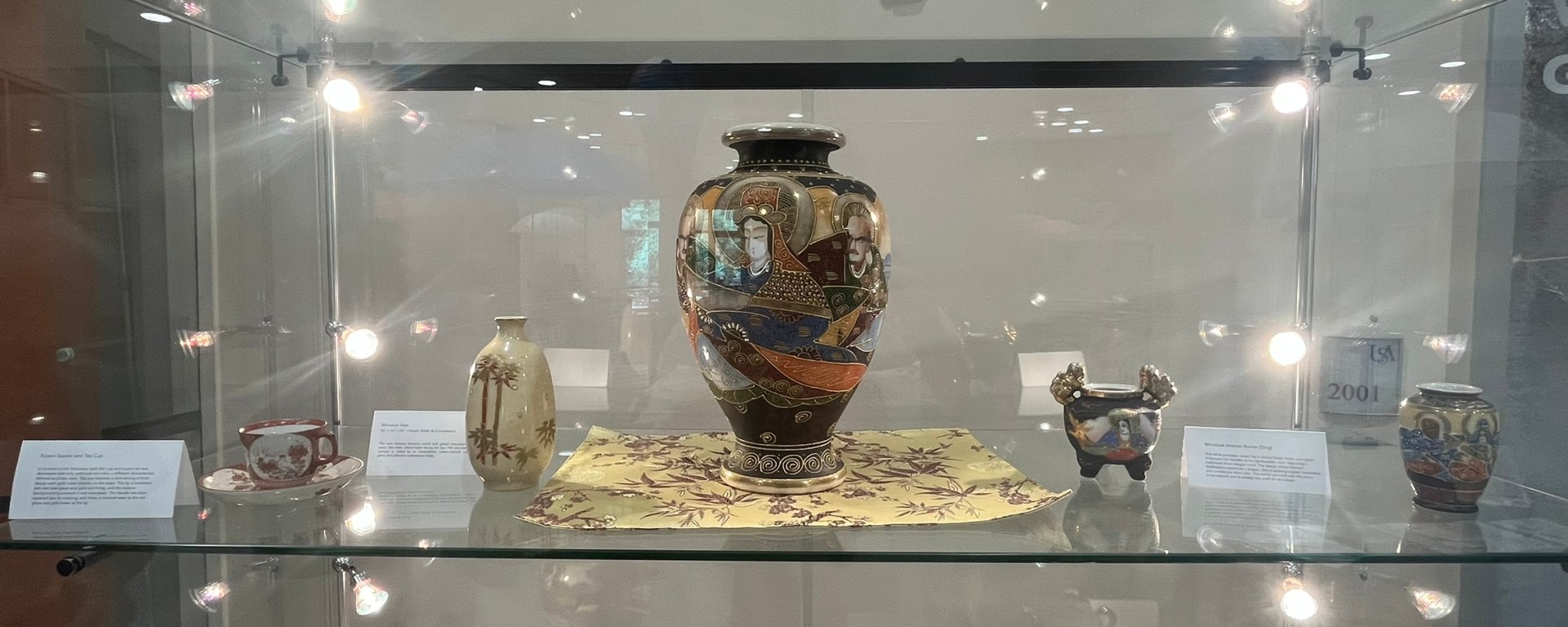
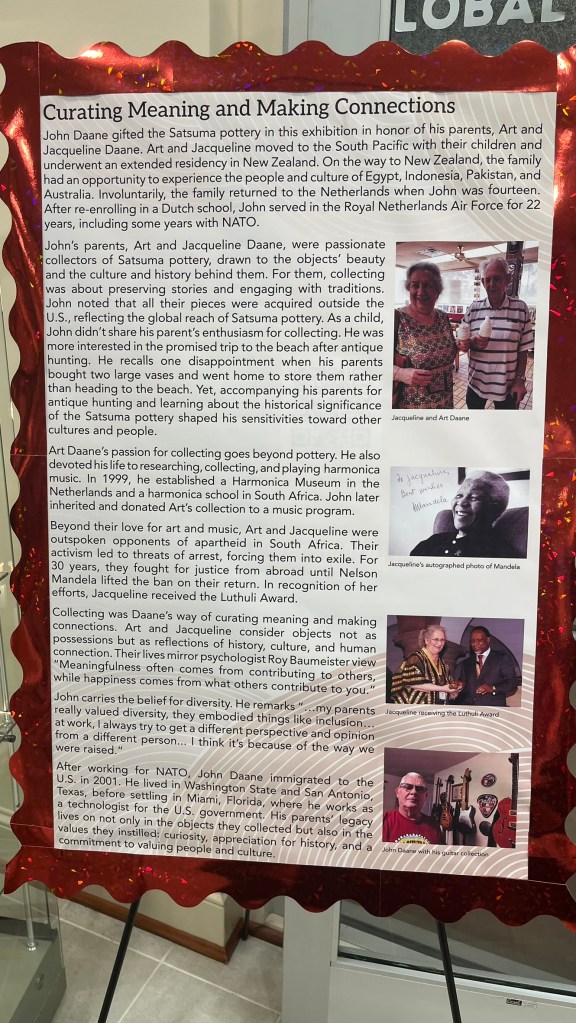
On Wednesday, Sept. 2, the University of South Alabama received original Japanese Satsuma pottery. In partnership with the Japan-America Society of Alabama (JASA), the GlobalUSA department invited the campus community and the public to an opening reception celebrating a unique collection of historic Satsuma pottery. Accompanied by refreshments, the pieces were displayed in glass cases at Meisler Hall with information accompanying each piece for guests to read.
Speaker Mark Jackson informed everyone in attendance of Alabama’s economic ties with Japan and that Japan is dedicated to upholding its relationship with Alabama. In an area called Pictriate after the Civil War, Abraham Lincoln demanded that the battlefield be his ambassador to Japan. When Lincoln took his wife to Japan, she fell in love with Satsuma trees, which encouraged her to bring them back to Fig Tree Island, where she planted them. This formed the connection between Satsuma, Alabama, and Japan and the eventual establishment of Satsuma, Alabama.
Satsuma Pottery was named after the Satsuma region of Japan and was made by using dark-colored clay covered with dark glazes to exhibit subtle variations. This style of pottery was referred to as ko-satsuma and was primarily intended for farmers and the lower class until the Genroku era, when the Japanese began to decorate the pottery more elaborately in order to sell it to the upper class. Following the Genroku era, the Meiji Period shifted the designs towards a more ornate appearance.
In 1876, Japan participated in the World’s Fair in Paris, France. The Western audience fell in love with Japan’s art and artifacts, which caused the rise of a movement known as Japonisme, highlighting Western interest in Japan’s aesthetics. With Satsuma pottery being displayed, these objects began being mass-produced for Western markets. Satsuma pottery production remained a large export for many years after the World’s Fair, allowing for a wide-ranging quality and style. Despite this, the Western appetite increased, and the pottery changed, which led to poor quality, pseudo-oriental motifs, and false stories which contributed to the decline in popularity. By the 1930s, Satsuma’s exports slowed, and collectors no longer desired them.

